

During 2024, Albania was subject to several international monitoring and evaluation processes regarding the respect for human rights and women’s rights (the CEDAW Committee on the implementation of the Convention on the Elimination of All Forms of Discrimination Against Women, and the GREVIO Committee on the implementation of the Istanbul Convention). These reports highlighted the need for “initial and ongoing systematic and mandatory training for the identification and response to all forms of violence against women, including in its digital dimension, focusing on the human rights of victims, their safety, individual needs, and empowerment.”
In response to these recommendations, throughout 2025, the Center for Gender Justice conducted training sessions with service providers who are part of the Coordinated Referral Mechanisms (CRM) at the local level for managing cases of digital violence against women and girls. This was particularly important because digital violence often occurs from former partners, ex-spouses, etc., and falls under the law “On Measures Against Violence in Family Relations.”
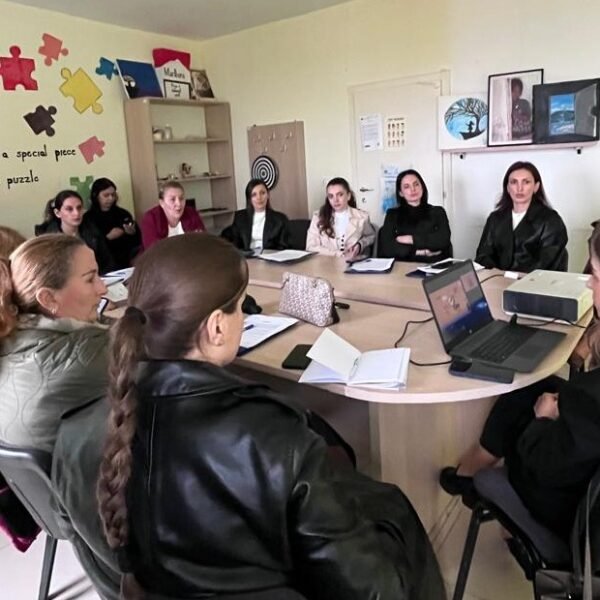
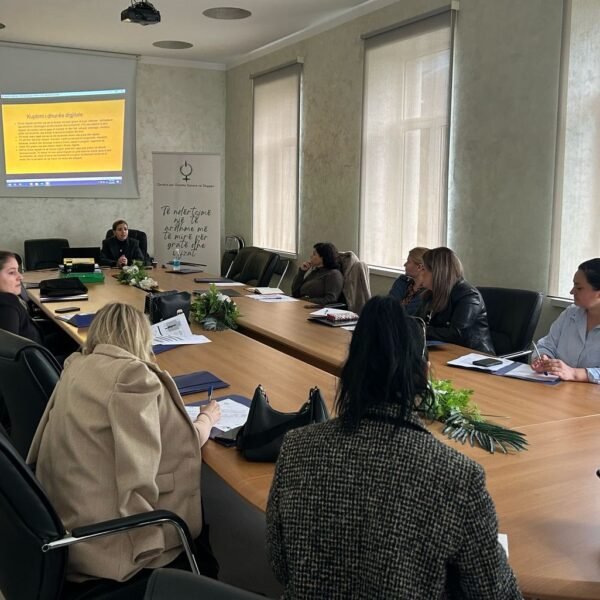
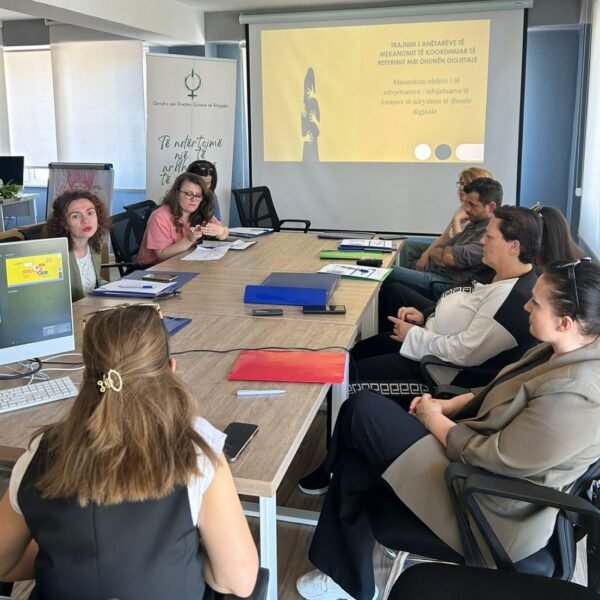
During 2025, the Center for Gender Justice conducted 12 trainings with over 200 service providers in 12 municipalities, members of the Interdisciplinary Technical Teams of the CRM, specifically in: Vlorë, Elbasan, Tirana, Durrës, Fier, Shkodër, Korçë, Berat, Lezhë, Dibër, Kukës, and Gjirokastër.
The main theme of the trainings was “Violence Against Women in the Digital Space – Effective Case Management and Protection of Personal Data Online.”
During the trainings, the importance of using digital technologies safely and protecting the privacy of victims at every stage of the case management process was emphasized. Participants were introduced to various tools and platforms that assist in reporting and tracking digital violence incidents, as well as procedures for the professional and discreet handling of confidential information.
An important part of these trainings was also strengthening the capacities of staff to provide psychological and social support, understanding the specific needs of victims, and ensuring a safe and supportive environment.
At the conclusion of the training cycle, participants committed to creating stronger cooperation networks between local institutions and civil actors, aiming to improve coordination and efficiency in addressing digital violence against women and girls.
The Center for Gender Justice will continue to support local capacities and monitor the implementation of this knowledge in practice, contributing to the creation of a more effective and sensitive system responsive to the needs of victims of gender-based violence in the digital space.